
Estrogen is a primary female sexual hormone. It is also produced in male bodies but at comparatively low levels. It supports reproductive, cognitive, bone, and cardiovascular health.
While it is natural for estrogen to fluctuate with the menstrual cycle, in some instances, it can stay low or high for prolonged periods that can affect health. Many foods help with estrogen hormone imbalance and also enhance its health benefits.
This article aims to explain what estrogen is, what causes its imbalance and its symptoms and list down some foods that help with its imbalance.
What is Estrogen?
Estrogen is a sex hormone produced by the ovaries, adrenal glands, and adipose (body fat) tissues. Estrogen and progesterone both play a vital role in female sexual and reproductive health. Along with this, healthy estrogen levels are also necessary to support brain function, strengthen bones and muscles, and maintain healthy cholesterol.
Estrogen is produced by the male body, although at a considerably low level and is important for their health as well.
What are the Types of Estrogen?
The body primarily produces three types of estrogen.
- Estrone (E1): Estrone is produced by the female body after menopause. It is the weakest form of estrogen. It is released by adipose tissue and the adrenal glands.
- Estradiol (E2): Estradiol is the most abundant and potent form of estrogen hormone. In females, it is produced mostly by the ovaries. It plays a key role in regulating the menstrual cycle, preparing the uterine lining for pregnancy, and supporting ovulation. In males, it is released in small amounts by the testicles. It also supports brain and bone health.
- Estriol (E3): Estriol is produced by the placenta during pregnancy. It prepares the body for breastfeeding and giving birth. Non-pregnant females have very low levels of estriol.
What Causes Estrogen Imbalance?
It is natural for estrogen levels to rise and fall throughout life and also fluctuate during the menstrual cycle. However, for some, their levels can remain high or low for prolonged periods, leading to health issues. Factors that cause estrogen imbalance include the following:
- Hypothalamic amenorrhea
- Hypopituitarism
- Turner syndrome
- Medication
- Alcohol
- Obesity
- Stress
- Xenoestrogen from plastics, pesticides, household cleaning products and some soaps and shampoos
What are the Symptoms of Estrogen Imbalance?
The symptoms of estrogen hormone imbalance can vary depending on whether the hormone is low or high and whether the imbalance occurs in males or females.
Low-Estrogen Symptoms in Females
- Menstrual migraines
- Irregular or no periods
- Hot flashes
- Vaginal dryness and painful sex
- Low sexual drive
- Difficulty concentrating
- Dry skin
- Insomnia
High-Estrogen Symptoms in Females
- Mood swings
- Fatigue
- Fibrocystic breasts
- Light or heavy periods
- Uterine fibroids
- Feeling depressed or anxious
- Weight gain
- Worsening of premenstrual syndrome (PMS)
Estrogen Fluctuation Symptoms in Males
- Dry skin
- Enlarged breasts
- Increased adipose tissue (body fat) in the belly
- Decreased sex drive
- Erectile dysfunction
- Infertility
Which Food Items Help with Estrogen Imbalance?
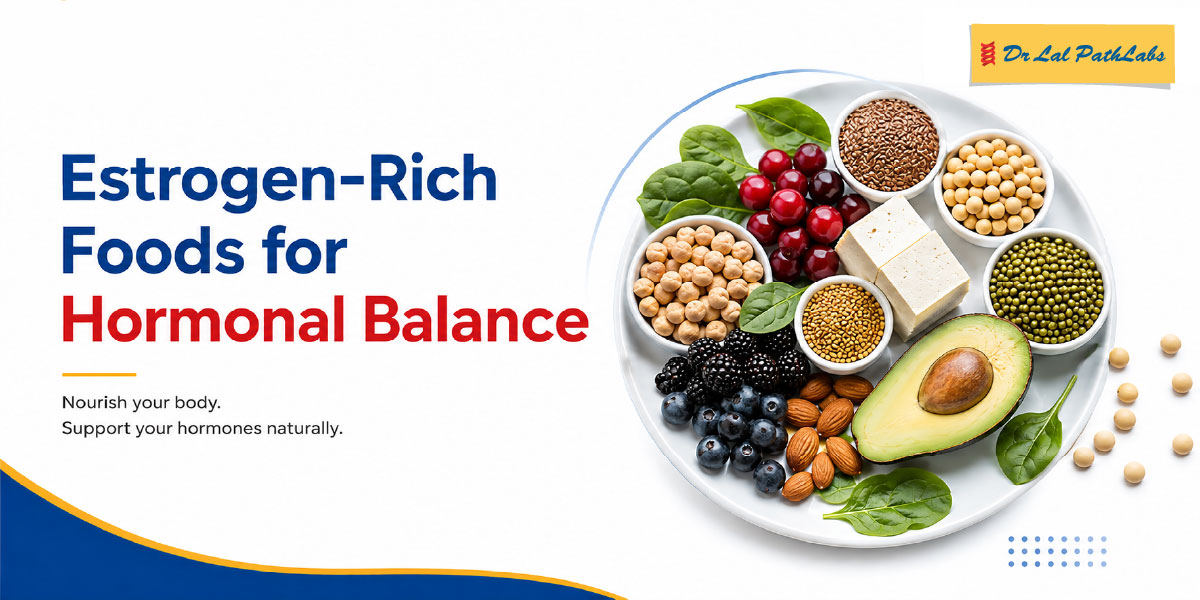
Foods for estrogen imbalance contain phytoestrogens, plant-based compounds that may produce mild estrogen-like effects and help support hormonal health. These compounds include isoflavones, lignans, resveratrol, and coumestans. Some estrogen-rich foods are as follows:
- Soy and soy-based food
- Legumes
- Whole grains
- Spinach
- Flaxseeds
- Cruciferous vegetables like cabbage, broccoli and Brussels sprouts
- Garlic
- Plum
- Peaches
- Red wine
- Tea
- Berries
Estrogen hormone is crucial for the reproductive and sexual health of both females and males. It also helps maintain healthy cholesterol and blood sugar levels, strengthens bones and muscles, and supports brain function, such as the ability to focus.
Some foods for hormonal imbalance like flaxseeds, peaches, cabbage, etc. can help. However, it is advisable to consult a doctor on experiencing symptoms of imbalance and schedule an estrogen test with Dr Lal PathLabs, before it seriously affects health.
Download the Dr Lal PathLabs app to book a test effortlessly!
FAQs
- What are the signs of low estrogen?
Signs of low estrogen hormone include menstrual migraine, hot flashes, irregular or no period, insomnia, dry skin, and decreased sexual drive. - What are some home remedies for hormonal imbalance?
Foods containing phytoestrogens can help with estrogen imbalance. These hormone-balancing foods include flaxseeds, soy, red wine, plum, berries, peaches, etc.