Outdoor play creates opportunities for developing a child’s fine motor skills, encourages curiosity, reduces anger and stress, and helps make new friends. But it also exposes children to disease-causing agents.
Lyme disease, a condition with long-term effects on a child’s health, is caused by one such bacterium. Early diagnosis and adequate Lyme disease treatment can prevent this.
This article provides an overview of Lyme disease, its causes and the symptoms parents should look out for in children.
What is Lyme Disease?
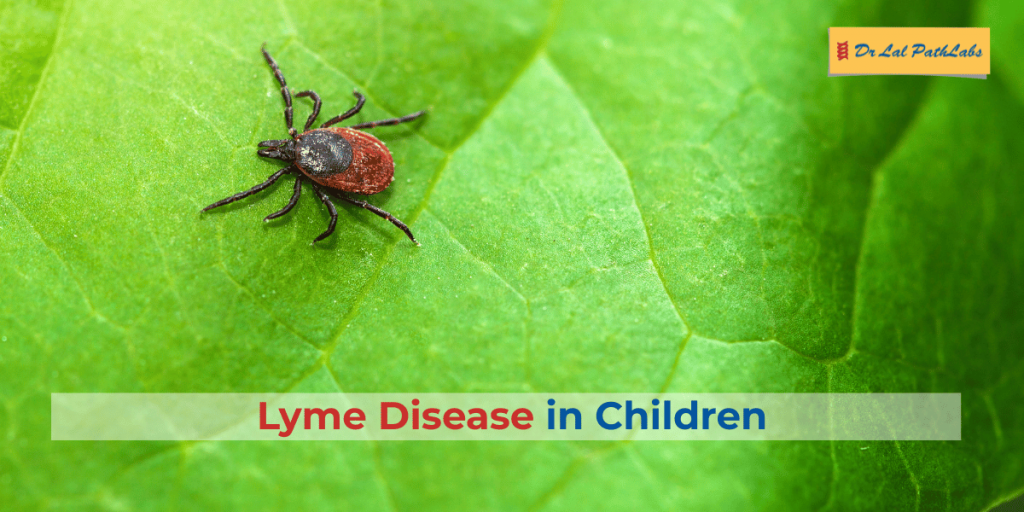
Lyme disease is a zoonotic infection transmitted by the bite of an infected tick carrying the Borrelia burgdorferi bacterium. According to the WHO disease classification standard, the Lyme disease ICD-10 code is A69.20. It progresses through three stages, with the early stage characterised by non-specific symptoms that mimic other conditions, making its diagnosis difficult.
What Causes Lyme Disease?
Lyme disease is caused by the bite of a blacklegged tick infected with the Borrelia burgdorferi bacterium. This bacterium is transmitted only when the tick remains attached for 36 to 48 hours. The tick is often attached to areas that are difficult to notice, such as the scalp, armpits and groin.
What are the Risk Factors of Lyme Disease?
- Outdoor Activities: Engaging in activities in grassy or wooded areas, such as forests or playgrounds, increases the risk of a tick bite.
- Time of the Year: Ticks are the most active in warmer months, increasing the prevalence of Lyme disease during this time of the year.
- Location: Certain regions of the world have a higher prevalence of blacklegged ticks that carry the Lyme disease-causing bacteria. These regions are the northeastern and north-central United States, as well as parts of Europe and Asia.
What are the Symptoms of Lyme Disease?
Lyme disease symptoms vary depending on the stage. These are categorised as:
Stage 1 – Early Localised
Early localised Lyme disease symptoms start within 3 to 30 days. It includes
- Red ring-like rash known as erythema migrans near the tick bite. Lyme disease rash starts off as a small red bump and expands outward in a circular or oval shape. It is warm to the touch but not necessarily painful or itchy.
- Flu-like symptoms such as:
Stage 2 – Early Disseminated
Early disseminated Lyme disease symptoms start within 3 to 10 weeks of acquiring a tick bite. Its symptoms include:
- Multiple ring-like rashes in different parts of the body
- Numbness or tingling in hands or feet
- Temporary paralysis of facial muscles
- Heart palpitation
- Dizziness
- Shortness of breath
- Nerve pain
Stage 3 – Late Disseminated
Late disseminated Lyme disease symptoms begin 2 to 12 months after a tick bite. It includes the symptoms from earlier stages and the following:
- Arthritis in large joints
- Difficulty concentrating
- Vision problems
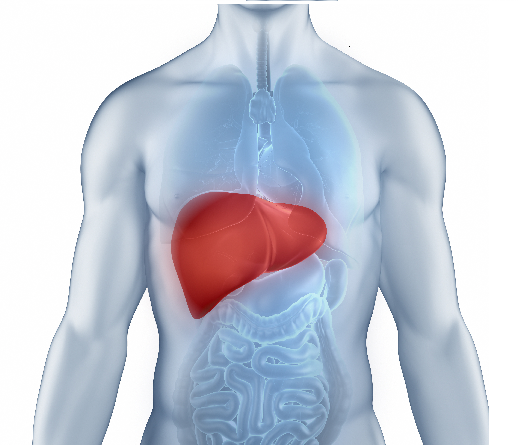
- Liver inflammation
- Cognitive impairment
How is Lyme Disease Diagnosed?
Lyme disease is diagnosed by the doctor through:
- A physical examination that verifies the presence of Lyme disease rash
- History of exposure to areas with infected ticks
- Blood test for Lyme disease
Prevention
Parents can reduce the risk of Lyme disease in their children by adopting the following preventive measures:
- Protective Clothing: Fully cover children using clothes with long sleeves and pants.
- Insect Repellents: Use insect repellents containing DEET or picaridin on clothes and exposed skin.
- Regular Tick Checks: Check the child’s body for any ticks attached to their skin after outdoor activity, especially hidden areas like armpits and scalp.
- Avoid Areas with Ticks: Keep children informed about staying away from grassy, bushy or wooded areas where ticks may be present.
Outdoor play is non-negotiable for children’s development, but it also exposes them to disease-causing bacteria. However, the use of preventive measures and timely diagnosis can go a long way in keeping children healthy. In case a child shows any symptoms of Lyme disease, it is advisable to consult a doctor and schedule a test for Lyme disease with Dr Lal Pathlabs.
To book a test, download the Dr Lal Pathlabs app!
FAQs
- What is the difference in before and after Lyme disease face?
The face before Lyme disease has actively working muscles that control facial movement. After acquiring Lyme disease, these muscles temporarily become weak or experience paralysis. - How serious can Lyme disease be?
A child with Lyme disease can still have severe symptoms such as arthritis in joints, cognitive impairments, nerve pain and vision problems even after 12 months of getting bitten by a tick. - What are 5 symptoms of Lyme disease?
The initial symptoms of Lyme disease include a red, ring-like rash around the bite site, fever, swollen lymph nodes, numbness in the hands or feet, and facial paralysis.