Haemorrhoids, commonly known as piles, are a widespread condition affecting a significant portion of the adult population. Despite being common, many cases go unrecognised or are left unaddressed due to a lack of awareness.
A clear understanding of their symptoms, underlying causes, and diagnostic process helps ensure timely and proper treatment.
This article overviews Haemorrhoids, including their symptoms, causes, and diagnosis.
What are Haemorrhoids?
Haemorrhoids, commonly called piles, are swollen and enlarged blood vessels located in and around the lower rectum and anus. Although the blood vessels in this region are a normal part of the human body, they become problematic when excess pressure causes them to swell, stretch, and inflame, causing haemorrhoids.
Haemorrhoids are broadly classified by their location.
- Internal haemorrhoids form inside the rectum and are generally not visible or felt.
- External haemorrhoids form beneath the skin surrounding the anus and can cause pain and discomfort.
- When an internal haemorrhoid pushes through the anal opening, it is referred to as prolapsed.
- A thrombosed haemorrhoid happens when a blood clot forms within an external haemorrhoid, resulting in a firm, tender lump.
What Causes Haemorrhoids?
Increased pressure on the veins of the lower rectum and anus is the primary cause behind haemorrhoid development. Several factors contribute to this:
- Straining during bowel movements: Pushing hard to pass stool puts direct pressure on rectal veins, gradually weakening their walls.
- Chronic constipation or diarrhoea: Constipation leads to harder stools and more straining, while persistent diarrhoea causes ongoing irritation to the anal region.
- Prolonged sitting: Spending extended periods seated, especially on the toilet, increases pressure on the veins around the anus.
- Pregnancy: The growing uterus exerts sustained pressure on pelvic veins.
- Excess body weight: Extra weight from obesity increases pressure in the abdomen, which in turn affects the rectal veins.
- Low-fibre diet: Insufficient dietary fibre results in harder stools, making straining during bowel movements more likely.
- Heavy lifting and age: Frequent heavy lifting puts strain on the body, similar to straining during bowel movements, while ageing weakens the tissues supporting rectal veins.
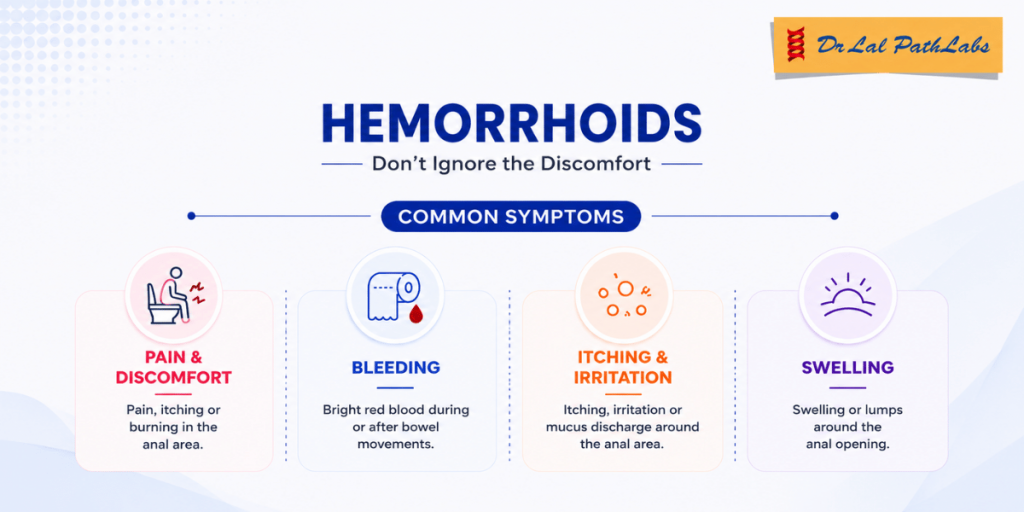
What are Haemorrhoids Symptoms?
Haemorrhoids symptoms vary depending on the type of haemorrhoid present.
- Internal Haemorrhoids
- Painless bright red bleeding during or after a bowel movement
- A sensation of incomplete emptying after passing stool
- If prolapsed, a soft lump felt or seen outside the anus, which may cause discomfort
- External Haemorrhoids
- Itching or irritation around the anus
- Pain or discomfort, particularly when sitting
- Swelling around the anal area
- Bleeding when wiping
- Thrombosed Haemorrhoids
- Sudden, severe pain around the anus
- A firm, tender, and visibly discoloured lump near the anal opening
- Swelling and inflammation that develops fast
How Are Haemorrhoids Diagnosed?
A doctor begins with a physical exam of the anal area to identify external haemorrhoids. A digital rectal exam may follow to check for internal haemorrhoids. If needed, an anoscope or sigmoidoscope can be used to get a clearer view of the rectum and anal lining.
How to Get Rid of Haemorrhoids?
For many people, mild haemorrhoids resolve on their own within a few days. Simple home-based haemorrhoids treatment is often enough to ease discomfort. These include:
- Soaking the anal area in warm water a few times a day to relieve pain and itching.
- Applying a cold compress to ease swelling and discomfort.
- Taking common painkillers such as paracetamol or ibuprofen to manage mild pain.
- Drinking adequate water daily to keep stools soft and easier to pass.
- Applying topical products containing hydrocortisone or witch hazel to ease itching and inflammation.
When symptoms do not improve after a week of home care, or if they worsen, consulting a healthcare professional is advised.
How to Prevent Haemorrhoids?
Simple lifestyle habits can reduce the risk of developing haemorrhoids.
- Eat a fibre-rich diet including fruits, vegetables, and whole grains to keep stools soft.
- Drink plenty of water throughout the day to prevent constipation.
- Avoid straining or pushing hard during bowel movements.
- Do not delay or ignore the urge to use the toilet.
- Avoid prolonged sitting when using the toilet.
- Exercise regularly to keep bowel movements consistent.
- Maintain a healthy body weight.
Although haemorrhoids are uncomfortable, they are largely manageable with timely care and simple lifestyle changes. Recognising symptoms early, maintaining a fibre-rich diet, and avoiding straining can help in both prevention and recovery.
If rectal bleeding or related symptoms are noticed, consulting a healthcare provider is strongly recommended. A stool occult blood test can also help detect blood in the stool and aid in accurate diagnosis.
Book the stool examination occult blood test conveniently through the Dr Lal PathLabs app.
FAQs
- What is the cause of haemorrhoids and piles?
Haemorrhoids or piles are caused by increased pressure on the rectal veins, commonly due to straining, constipation, pregnancy, prolonged sitting, or a low-fibre diet. - Are piles very serious?
Piles are generally not serious. Most cases resolve with simple haemorrhoids treatment at home. However, a healthcare professional should evaluate persistent or severe symptoms promptly.