
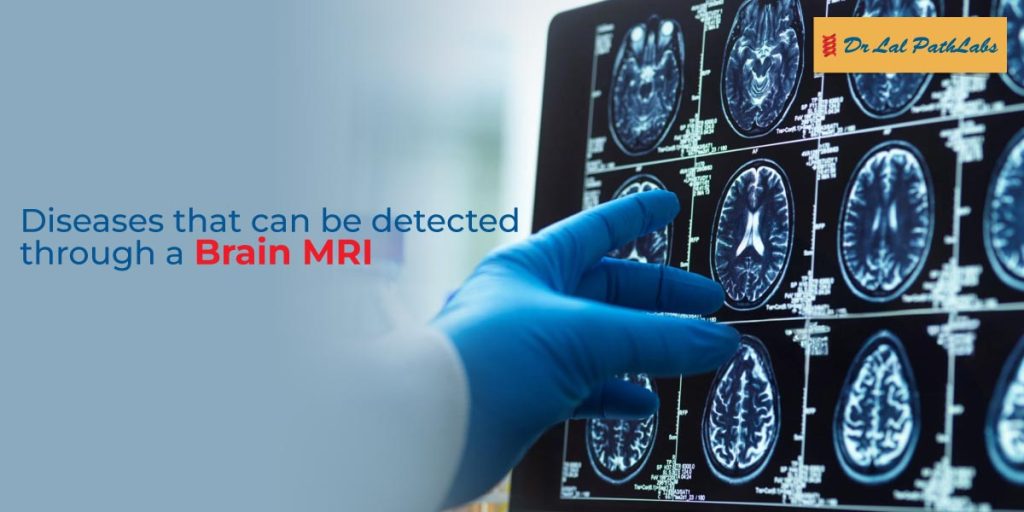
The brain controls and regulates every function of the human body, including movement, breathing, thoughts, memory, speech, emotions, body temperature, and more. Combined with the spinal cord, it forms the central nervous system of the human body. However, many diseases affect the brain and its function. A brain MRI is a useful tool in detecting these diseases.
This article explores what a brain MRI is, the diseases it detects, and what its test results look like.
What is a Brain MRI?
A brain MRI (magnetic resonance imaging) or head MRI is a diagnostic test that produces detailed images of the structures of the brain and may also include the neck and the spinal cord.
Brain MRI is a painless, non-invasive procedure in which the MRI machine passes radiofrequency waves through the body. A transmitter/receiver in the machine captures the patterns, called sequences, of the radio waves and their digital images are produced on the computer.
When is a Brain MRI recommended?
A doctor recommends a brain MRI to determine the underlying cause of certain conditions and their symptoms. These may include:
- Inability to move part of the body
- Problems with speech
- Headaches
- Dizziness
- Hearing problem
- Vision problems
What Precautions Need to Be Taken Before a Brain MRI?
A brain MRI uses radio waves to produce images, which is comparatively safer than CT scans and X-rays that use radiation. However, pregnant women should inform their doctor before undergoing a brain MRI.
Apart from this, metallic and electronic items such as jewellery, hairpins, hearing aids, mobile phones, etc are not allowed inside the exam room. The magnetic field in the MRI machine can turn them into harmful projectiles or cause burns. Patients with cochlear implants, clips for brain aneurysms, cardiac defibrillators, pacemakers or other metallic implants should inform their doctor before a brain MRI so that necessary precautions can be taken.
What Diseases are Detected Through a Brain MRI?
A brain MRI can help in diagnosing or ruling out a variety of conditions. Some of them are:
- Stroke: Ischemic and hemorrhagic are the two primary stroke types. Ischemic stroke happens when the supply of blood to certain parts of the brain is blocked or reduced, which causes the death of brain cells. In hemorrhagic stroke, a blood vessel in the brain leaks or bursts and causes bleeding.
- Brain Tumours: Brain tumours are abnormal cell growths in the brain or nearby areas, such as nerves, the pituitary gland, the pineal gland and the membranes that cover the brain.
- Encephalitis: Encephalitis is a condition characterised by brain inflammation, most often caused by a viral infection. In some cases, immune cells mistakenly attack the brain, causing encephalitis.
- Hydrocephalus: Hydrocephalus is the excessive buildup of cerebrospinal fluid in the brain cavities called ventricles. It puts pressure on the brain and damages brain tissue, leading to changes in movement, thinking and other functions.
- Epilepsy: Epilepsy is a seizure disorder characterised by two or more unprovoked seizures. Seizures are an excessive surge of electrical activity in the brain.
- Multiple Sclerosis (MS): Multiple sclerosis is a chronic autoimmune condition that affects the brain and spinal cord (the central nervous system, or CNS). The immune system mistakenly damages the myelin sheath surrounding nerve fibres within the CNS. This disrupts signals sent by nerves to the body and affects vision, sensation and movement.
What Does a Normal and Abnormal Brain MRI Look Like?
A healthy brain MRI would show the following results:
- Clear grey matter and white matter boundaries
- Normal ventricles and fluid spaces
- Symmetrical left and right hemispheres
- No mass, bleed, stroke swelling or midline shift
An abnormal brain MRI would show the following results, which are signs of brain-related diseases:
- Dark or bright regions that indicate fresh or old haemorrhage
- Enlarged brain cavities with compressed brain tissues
- Mass lesions that shift midline and occupy space
- Focal bright or dark spots that disrupt expected tissue signal patterns
The brain regulates many functions of the body and is also susceptible to diseases that can affect these functions and cause permanent harm. In instances of severe headache, problems with vision, speech, or coordination, first seizures or any other symptom indicating a neurological problem, it is critical to consult a doctor and schedule a brain MRI with Dr Lal PathLabs. Download the Dr Lal PathLabs app to schedule the test conveniently!
FAQs
- Does your whole body go in for a brain MRI?
In most cases, only the head and upper body enter the MRI machine tunnel for a brain MRI. The whole body enters only if the scan also includes the spinal cord. - What problems can a brain MRI detect?
A brain MRI can detect signs of haemorrhage, inflammation, enlarged brain cavity, mass lesion, etc., which help in diagnosing conditions like stroke, encephalitis, epilepsy, multiple sclerosis and other conditions that affect bodily functions. - Is an MRI better than a CT scan?
A brain MRI produces more detailed images of brain structures than a CT scan and does not use radiation. That makes it the preferred choice for neurological conditions.