Graves’ disease is an autoimmune condition where the thyroid gland overproduces hormones, speeding up metabolism and affecting multiple body systems. It is considered one of the most common causes of hyperthyroidism and often leads to discomfort like a rapid heartbeat, weight loss, and eye issues.
In this article, we’ll understand its causes, symptoms, diagnosis through thyroid testing, Graves’ disease treatment for better management, and prevention of this disease.
What is Graves’ Disease?
Graves’ disease is a result of antibodies tricking the thyroid gland, causing it to enlarge (becoming a goiter) and releasing excess hormones. In the majority of cases, this condition leads to hyperthyroidism.
Unlike other thyroid issues, Graves’ disease is chronic and often affects women aged over 30. It may also involve changes to the eyes or thickening of the skin around them. This eye condition is commonly known as Thyroid Eye Disease (TED) or Graves’ orbitopathy.
What are the Eye Complications in Graves’ Disease?
Eye complications from Graves’ ophthalmopathy affect up to one-third of patients, caused by autoimmune inflammation of orbital tissues. Here are some common issues:
- Bulging eyes (exophthalmos) that may not fully close, leading to dryness or corneal damage.
- Redness, swelling, gritty sensation, light sensitivity, or double vision from muscle enlargement.
- Pressure on the optic nerve can risk vision loss in severe cases.
- Pain, tearing, or restricted eye movement that limits daily activities.
What Causes Graves’ Disease?
Here are some of the most common triggers of Graves’ disease:
- Genetic factors, with family history raising the risk.
- Stress, smoking, or infections that activate autoantibodies like TSH receptor antibodies (TRAb).
- Hormonal changes, excess iodine, or viral illnesses disrupt immune tolerance.
- Rarely, some medications or other autoimmune conditions like rheumatoid arthritis.
What are the Risk Factors of Graves’ Disease?
Here are some common risk factors that help doctors identify at-risk patients early:
- Family history: Having a close relative with Graves’ disease or other autoimmune thyroid conditions makes an individual prone to Graves’ disease.
- Gender and age: Women are comparatively more prone to this disease, especially at ages above 30 when hormones fluctuate.
- Smoking: Increases the risk of Graves’ disease overall and worsens the condition of the eyes.
- Stressful life events: Emotional or physical stress often precedes the onset.
- Other autoimmune disorders: Health conditions like type 1 diabetes, vitiligo, or rheumatoid arthritis can also increase the chances of Graves’ disease.
What are Graves’ Disease Symptoms?
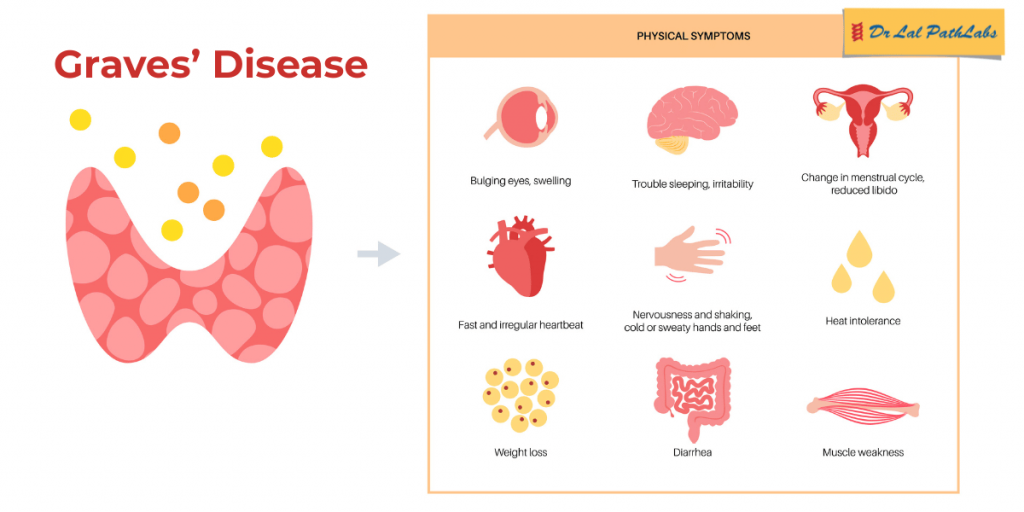
Symptoms of Graves’ disease build gradually and include:
- Heartbeat racing from steady to pounding or irregular (palpitations).
- Shaky hands (tremors) due to anxiety.
- Trouble sleeping.
- Unexpected weight loss.
- Feeling of being overheated all the time and profuse sweating.
- Extreme fatigue, muscle weakness.
- More frequent bowel movements.
- Brittle hair and thinning skin.
- Graves’ disease eyes, which include bulging (exophthalmos), redness, double vision, pain, or gritty irritation.
- A swollen thyroid (goiter).
- Irregular menstrual cycles in women, or erectile issues in men.
How Do Medical Professionals Diagnose Graves’ Disease?
Doctors diagnose Graves’ disease through targeted tests to pinpoint the root cause. They start with the medical history, lifestyle factors like smoking or stress, and a physical exam. Here’s a list of common diagnostic steps a medical provider may suggest:
- Physical exam: Noting rapid pulse, warm/moist skin, enlarged thyroid (goiter), hand tremors, or eye bulging to raise initial suspicion.
- Blood tests: TSH and antibody tests like TRAb/TSI to confirm autoimmune causes of hyperthyroidism.
- Hyperthyroidism tests: TSH, free T4, T3, and antibody tests to confirm hyperthyroidism and autoimmunity.
- Radioactive iodine uptake (RAIU): Its high uptake shows an overactive thyroid, distinguishing it from other causes.
- Thyroid ultrasound: Helps experts assess gland size, nodules, or blood flow.
- Orbital imaging (CT/MRI): For Graves’ disease eyes, checks for inflammation or muscle swelling.
- ECG or echocardiogram: Evaluates heart effects from excess hormones.
What is the Treatment for Graves’ Disease?
Medical practitioners start Graves’ disease treatment with the least invasive options first. But if the condition is severe, then it might escalate to surgery:
- Doctors may suggest antithyroid drugs to block hormone production.
- Radioactive iodine is used to destroy overactive cells, often leading to hypothyroidism, which is treated with levothyroxine.
- Beta-blockers for symptom relief, like rapid heartbeat or tremors.
- Surgery (thyroidectomy) for large goiters, cancer risk, or drug intolerance.
- Steroids, selenium, or orbital decompression surgery for Graves’ disease eyes.
Individuals showing Graves’ disease symptoms must consult a doctor for proper evaluation. Book the recommended thyroid tests easily on the Dr. Lal PathLabs app.
FAQs
- What is Graves’ Disease?
Graves’ disease is an autoimmune health problem that triggers the thyroid gland to overproduce hormones. It can also lead to hyperthyroidism and cause severe weight loss. - How are Graves’ disease eyes?
Graves’ disease eyes often bulge out (called exophthalmos), feel gritty, or cause double vision due to swelling around the eyes. - What are Graves’ disease symptoms?
Graves’ disease symptoms include shaky hands, losing weight without trying, a racing heart, and sometimes bulging eyes or swelling of the neck.