Irritable bowel syndrome (IBS) is a very common gastrointestinal complaint in India. As per the International Journal of Medical Science and Current Research, the prevalence of IBS in India is between 7-15%.
However, a different and more serious category of gut disease shares many of these symptoms: inflammatory bowel disease (IBD). Unlike IBS, which is a functional disorder without structural damage, IBD involves chronic, measurable inflammation of the intestinal lining that can cause permanent harm if left untreated. Crohn’s disease is one of the two main forms of IBD.
This article discusses Crohn’s disease, its symptoms, causes, and how it’s diagnosed.
What is Crohn’s Disease?
Crohn’s disease is a chronic, inflammatory condition of the gastrointestinal tract that can affect any part of an individual’s digestive system, from the mouth to the anus, though it most commonly involves the terminal ileum (the end of the small intestine) and the beginning of the colon.
Crohn’s disease can affect all the layers of the bowel wall and may occur in discontinuous patches, leaving healthy segments of gut between inflamed areas. The disease affects patients in a relapsing and remitting course with periods of active inflammation (flares) alternating with periods of remission.
What are the Major Crohn’s Disease Symptoms?
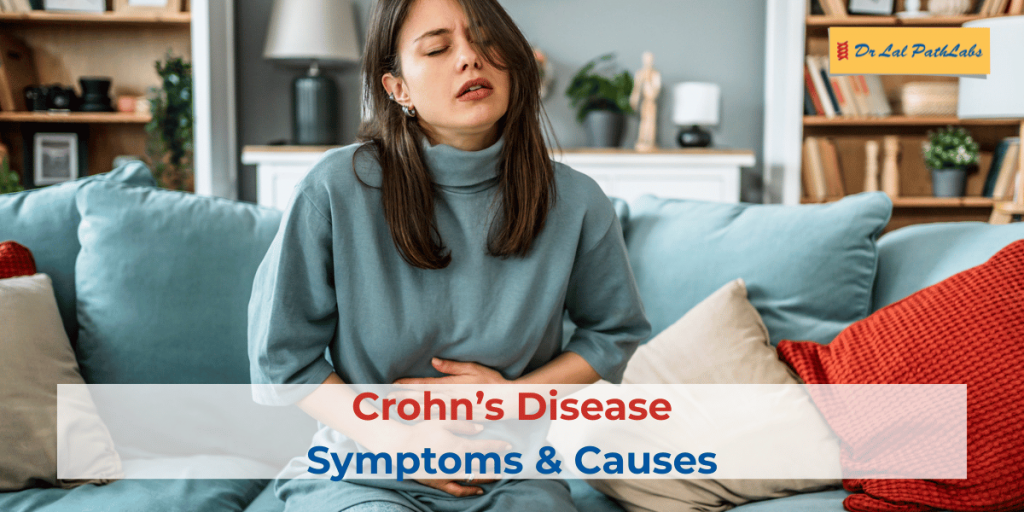
Crohn’s disease symptoms can range from mild and intermittent to severe and debilitating. The onset is typically gradual, and symptoms often predate a formal diagnosis by months to years.
Common symptoms include:
- Chronic abdominal pain and cramping: Often in the lower right abdomen, corresponding to the ileocaecal region. Pain may worsen after eating.
- Persistent diarrhoea: Frequently loose or watery, sometimes bloody or containing mucus.
- Unintentional weight loss: Caused by malabsorption, reduced food intake due to pain, and systemic inflammation.
- Fatigue and weakness: Often resulting from anaemia, nutritional deficiencies, and the physical burden of chronic inflammation.
- Fever: Low-grade fever may accompany active flares, reflecting systemic inflammation.
- Perianal symptoms: Fissures, fistulae (abnormal connections between the bowel and skin), and abscesses around the anus, though these are reported less frequently in Indian patients than in Western populations.
- Rectal bleeding: Less common in Crohn’s disease affecting the small bowel, but more prominent when the colon is involved.
What Causes Crohn’s Disease?
The exact cause of Crohn’s disease is not fully established, but research consistently points to an interaction between genetic susceptibility, immune system dysregulation, the gut microbiome, and environmental factors. The immune system shows an abnormal, sustained inflammatory response to harmless bacteria or food particles in the gut, causing injury to the intestinal wall. This is what is considered to lead to Crohn’s disease.
How is Crohn’s Disease Diagnosed?
Diagnosing Crohn’s disease requires a combination of clinical evaluation, laboratory tests, imaging, and endoscopy.
Key diagnostic investigations include:
- Fecal calprotectin test: The fecal calprotectin test is a non-invasive stool test that measures the concentration of calprotectin. It is a critical first-line tool for distinguishing IBD (including Crohn’s disease) from functional gut disorders like IBS.
- Blood tests: Complete blood count (CBC) may reveal anaemia and raised platelet counts. Inflammatory markers like CRP (C-reactive protein) and ESR (erythrocyte sedimentation rate) are higher than normal during active disease.
- Colonoscopy with biopsy: Colonoscopy allows direct visualisation of the colon and terminal ileum and can help confirm Crohn’s disease.
How can Crohn’s Disease be Managed?
There is currently no accepted or reliable cure for Crohn’s disease. The goals of Crohn’s disease treatments are to induce and maintain remission, heal the intestinal mucosa, prevent complications, and preserve nutritional status and quality of life.
Dietary control is central to the management of Crohn’s disease. No single Crohn’s disease diet suits all patients, as dietary triggers vary. However, some general Crohn’s disease diet principles to follow include:
- Eat small, frequent meals to minimise post-meal discomfort.
- Avoid high-fibre meals during active flares and introduce them gradually during remission.
- Hydrate adequately and prevent electrolyte loss with ORS.
- Limit common trigger foods like spicy foods, greasy or fried foods, dairy products, carbonated drinks, caffeine, and alcohol.
Individuals experiencing persistent abdominal pain, unexplained diarrhoea, or weight loss should seek medical evaluation early. A fecal calprotectin test is a non-invasive first step toward identifying intestinal inflammation and guiding further investigation. Consult with a healthcare provider and download the Dr. Lal PathLabs app today to schedule a test.
Frequently Asked Questions
- What is the recommended Crohn’s disease diet?
During active flares, a low-residue, easily digestible Crohn’s disease diet, avoiding raw vegetables, whole grains, and high-fat or spicy foods, helps reduce symptoms. In remission, a balanced diet rich in nutrients is recommended, with gradual reintroduction of fibre. - What is a fecal calprotectin test?
A fecal calprotectin test is a non-invasive stool test that measures the level of calprotectin, which is a protein released by neutrophils (white blood cells) when the intestinal lining is inflamed. - Can Crohn’s disease cause other complications?
Crohn’s disease can cause serious complications like intestinal strictures where scar tissue narrows the intestine, fistulae, abscesses and the risk of colorectal cancer.