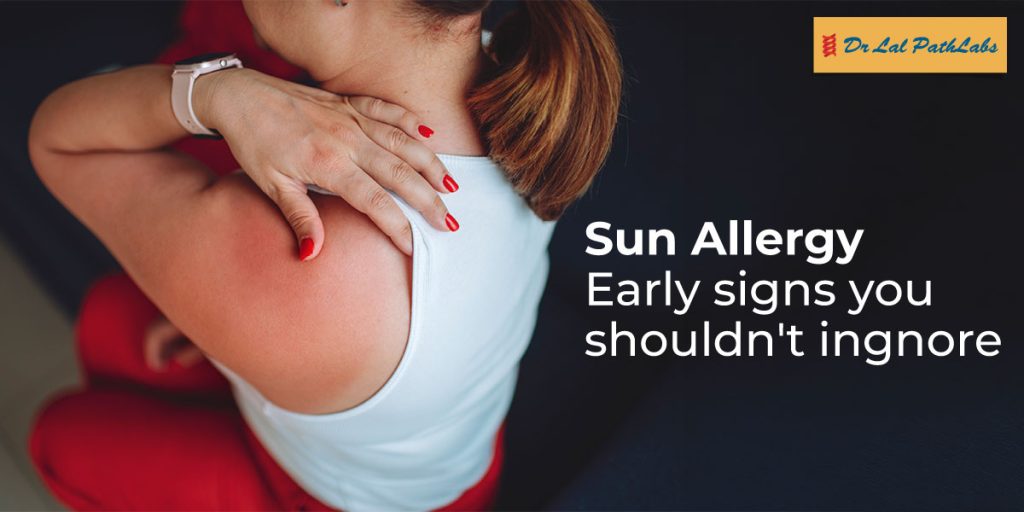
Sun exposure is commonly associated with sunburn or tanning. However, for certain individuals, it triggers a more complex response known as a sun allergy. It can be mild or serious and can significantly affect daily life.
This article provides an overview of sun allergy, including its causes, symptoms, and prevention.
What is Sun Allergy?
Sun allergy is an immune reaction triggered by sun exposure. The skin perceives certain sun-altered cells as foreign and mounts a defence against them. That results in a rash, blisters, or other skin changes.
What are the Types of Sun Allergy?
Common types of sun allergy include:
- Polymorphous Light Eruption (PMLE): This is the most common type of sun allergy on skin. It causes an itchy skin rash from sun exposure of a few hours. It’s more prevalent in females, people with lighter skin, teenagers, and young adults.
- Actinic Prurigo: It’s a hereditary condition that causes nodules to form on the skin. With more intense symptoms, it often starts in childhood.
- Photoallergic Eruption: This occurs when a chemical on the skin, such as a sunscreen, fragrance, or medication, reacts with sunlight. Symptoms may appear one to two days after exposure.
- Solar Urticaria: This type causes hives (raised, itchy bumps) within minutes of sun exposure. It’s a rare condition and most often seen in young women.
What Causes Sun Allergy?
The exact cause of sun allergy is not fully understood. The immune system appears to identify certain sun-altered skin cells as foreign and launches a response against them, similar to how the body reacts to an infection or foreign substance.
Beyond this general mechanism, other causes of allergic reaction to sun are:
- Genetics: Some forms are directly inherited. A family history of sun sensitivity increases the likelihood of developing a reaction.
- Immune response to UV light: In PMLE and Solar Urticaria, the skin reacts to ultraviolet (UV) rays from the sun. The body releases histamines, leading to itching, redness, and rash.
- Chemical reactions on the skin: Sometimes, a substance applied to the skin reacts with sunlight to trigger a rash. These can be sunscreens, fragrances and cosmetics, or antibiotic ointments.
- Medications: Certain medicines increase the skin’s sensitivity to sunlight. These include antibiotics, NSAIDs, diuretics, antihistamines, retinoids (used for acne and anti-ageing), and hormonal medications.
What are the Early Signs of Sun Allergy that Shouldn’t be Ignored?
Skin-related sun allergy symptoms are the most common early indicators:
- Redness
- A persistent itch or burning feeling on exposed skin
- Small raised bumps, papules, or patches on sun-exposed areas
- Raised, itchy, red welts on the skin
- Small fluid-filled blisters, particularly in more severe reactions
- Swelling
- Scaling or crusting
- Oozing
Some people experience symptoms that go beyond the skin, especially in the early stage of a reaction. These are less common but should not be ignored:
- Headache
- A feeling of being unwell, similar to mild flu-like symptoms
- Nausea
- Dizziness or a feeling of faintness
- Wheezing or shortness of breath
Certain symptoms indicate a severe allergic reaction and must not be ignored under any circumstances:
- Sudden hives combined with swelling around the eyes or lips
- Difficulty breathing or swallowing
- Chest pain
- Severe weakness or fainting
- Vomiting
How to Manage and Prevent Sun Allergy?
When an allergic reaction to the sun occurs, the first step is to get out of the sun immediately. The following sunburn allergy treatment can help ease symptoms:
- Place a cold, damp cloth on the affected skin to reduce irritation
- Stay well hydrated by drinking adequate water
- Apply a moisturising lotion to relieve dryness and scaling
- Take an over-the-counter antihistamine to reduce itching and redness
- Apply a corticosteroid cream to calm the skin
Prevention is most effective. The following measures can alleviate the risk of a reaction:
- Apply a sunscreen that has SPF 30 or more before going outdoors. Reapply after every two hours, or more frequently if sweating or swimming.
- Stay indoors or in the shade between 10 a.m. and 4 p.m., when UV intensity is at its highest.
- Wear long sleeves, long pants, wide-brimmed hats, and UV-protective sunglasses to have a physical barrier against sunlight.
- At the start of spring and summer, slowly increase time spent in the sun. This builds skin tolerance and reduces the likelihood of a reaction.
Sun allergy can disrupt daily life if left unchecked. Early diagnosis and the right precautions can help reduce flare-ups and skin reactions after sun exposure.
For individuals who experience recurring or unexplained skin reactions after sun exposure, timely testing is an important first step. Dr Lal PathLabs offers a comprehensive allergy test panel to help identify sensitivities and guide appropriate management. Download the Dr Lal PathLabs App for easy test bookings.
FAQs
- What are sun allergy home remedies?
Applying a cool damp cloth to affected skin, staying hydrated, and taking an over-the-counter antihistamine can help ease mild symptoms. - Does sunscreen stop sun allergy?
Sunscreen reduces the risk but does not completely prevent sun allergy. A broad-spectrum SPF 30 or higher offers protection but must be combined with other precautions.