Measles, also known as rubeola, is an extremely contagious infection that primarily affects young children and adults over 20 years old. While it often begins with mild symptoms such as fever and cough, it can quickly lead to serious complications. Even though it is preventable through vaccination, measles continues to cause numerous deaths worldwide each year, highlighting the urgent need to better understand the disease and how it can be treated. This article provides a clear understanding of what is measles, symptoms and causes, and how it can be diagnosed and managed.
What is Measles?
Measles is a highly contagious airborne disease. The disease causes rashes in the body, weakens the immune system, and destroys immune cells responsible for remembering past infections that one had developed immunity to. Measles can also lead to other severe complications that can even cause death. These include:
- Encephalitis, which causes brain swelling and brain damage
- Blindness
- Severe diarrhoea
- Ear infections
- Serious breathing problem that can cause pneumonia
- Bronchitis (Inflammation of the airways)
- Laryngitis (Inflammation of the voice box)
These complications are most common in children under 5 years and adults over age 20, especially those who aren’t vaccinated. Usually, malnourished children who do not get enough vitamin A or who have weak immune systems
are more vulnerable to the illness.
What are the Causes of Measles?
Measles in adults or children is caused after exposure to the measles virus. The virus spreads through air when an infected person talks, breathes, sneezes, or coughs. It remains active and contagious in the air or on any infected surface for up to two hours. The virus can also be passed from a mother to her baby before birth, during birth, or through breastfeeding.
What are the Symptoms of Measles?
Measles symptoms usually develop in the body one to two weeks after contact with the virus. Some of the common symptoms of measles that appear within the first 2-3 days include:
- Fever, which can go as high as 105 degrees Fahrenheit
- Dry cough
- Bloodshot and watery eyes
- Fatigue
- Running nose
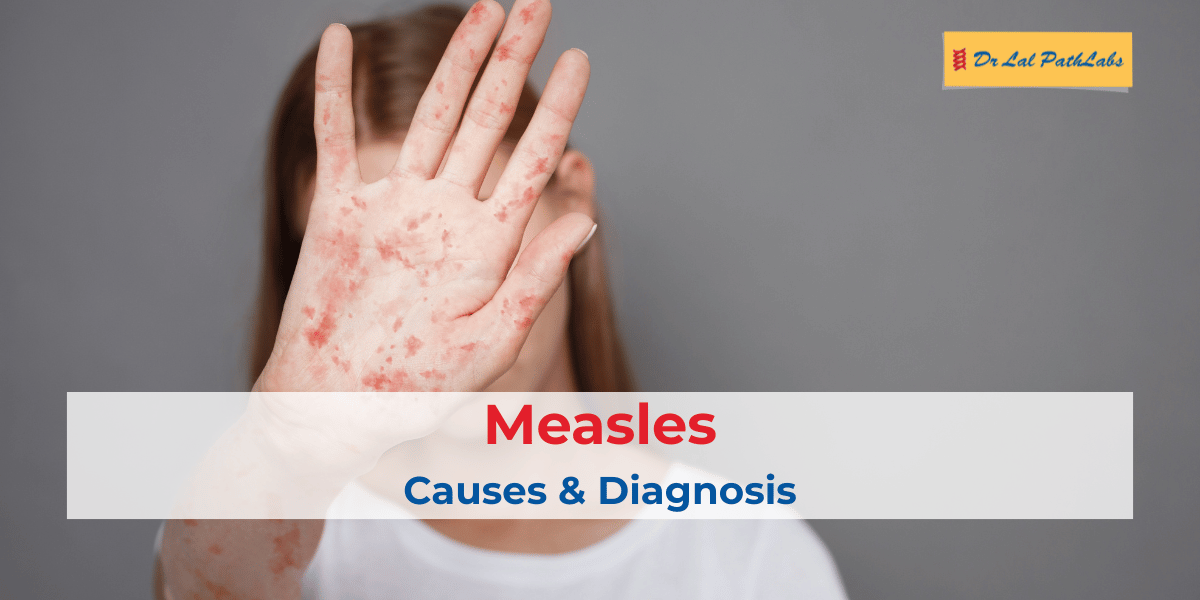
After 2-3 days of these symptoms, red spots with a white centre, called Koplik spots, appear inside the mouth. Around 14 days after exposure to the virus, the measles rash starts to develop on the face and neck, and slowly spreads to other parts of the body. The measles rash is usually red in colour and is made up of large, flat spots with tiny raised bumps.
How is Measles Diagnosed?
To diagnose measles in adults or children, doctors consider a patient’s medical history and vaccination status. They also perform a physical exam and look for measles rashes and Koplik spots. To confirm the diagnosis, they conduct a blood or urine test or use a swab to gather a sample from the throat or nose. These tests detect either the genetic material of the virus or any antibodies produced by the body in response to the infection.
How to Prevent Measles?
The best way to prevent measles is by getting vaccinated. Individuals who receive two doses of the measles vaccine are highly unlikely to be infected. Moreover, since there is no antiviral treatment for measles, one can only manage the symptoms and prevent complications. To manage measles symptoms:
- Take Nonsteroidal Anti-Inflammatory Drugs (NSAIDs) to relieve pain or fever after consultation with a doctor.
- Get enough rest.
- Eat nutritious food.
- Drink plenty of fluids to prevent dehydration.
- Gargle with salt water.
- Take antibiotics to treat complications like pneumonia
and ear and eye infections only after recommendations from healthcare professionals.
Although measles is highly contagious, it is largely preventable. Early recognition of symptoms, proper medical care, and complete vaccination can significantly reduce the risk of severe complications. Additionally, being informed about the illness and prioritising immunisation is important to protect individuals, families, and communities from measles. If one experiences measles symptoms, they must consult their healthcare provider and book a measles test
or urine test
through the Dr Lal PathLabs app. Download the Dr Lal PathLabs app
now for convenient lab test booking, report access, and timely health updates.
FAQs
- How to treat measles in adults?
There is no specific treatment for measles in adults. Care mainly involves managing symptoms and reducing the risk of complications. - What are the symptoms of measles?
The measles rash is the most common symptom. In addition, one can have other measles symptoms like high fever, cough, runny nose, red and watery eyes, and fatigue. - How many days will measles last?
Measles typically lasts about 10 to 14 days in people who don’t have complications. The duration may be longer in adults or in people with weakened immune systems, and complications may further prolong recovery.