According to the World Health Organisation, 241 million cases of malaria were present worldwide in 2020, causing over 600,000 deaths, while dengue infections have surged globally, with about 100–400 million infections occurring each year.
Malaria and dengue are two of the most widespread mosquito-borne diseases globally, especially in tropical and subtropical regions. Despite sharing a common transmission vector—mosquitoes—and similar symptoms, these diseases differ significantly in their causes, modes of transmission, symptoms, diagnosis, treatment, and prevention.
What Are Malaria and Dengue?
Plasmodium species, a type of protozoan parasite, are responsible for causing malaria. It primarily affects red blood cells and is transmitted through an infected female Anopheles mosquito’s bite. There are five species of Plasmodium, which are the causes of malaria in humans, with P. falciparum and P. vivax being the most common.
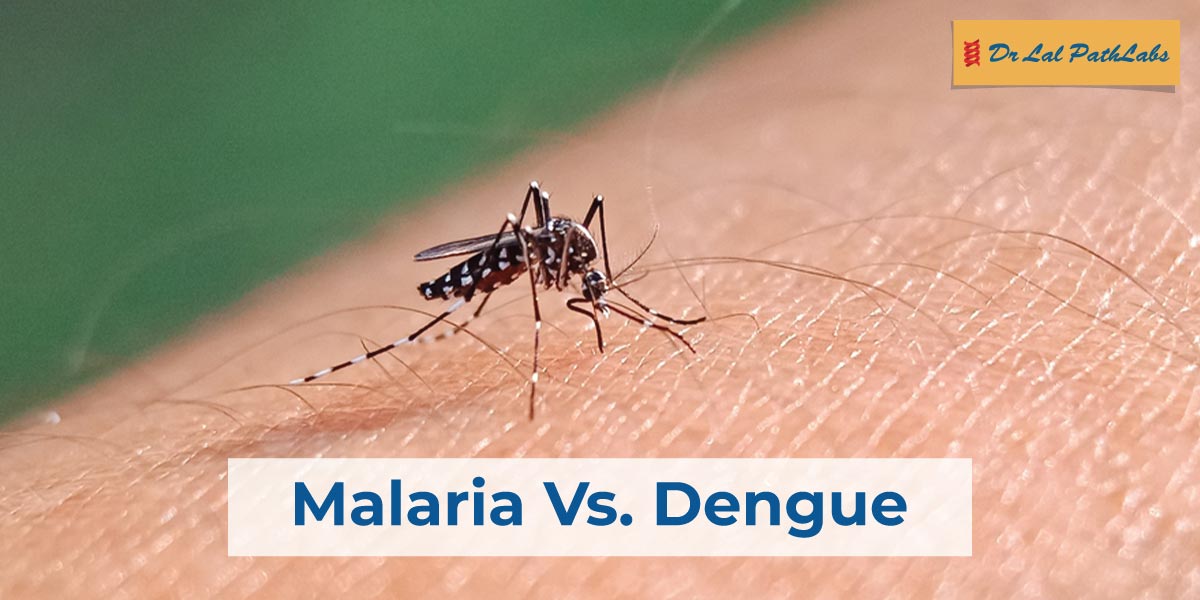
On the other hand, the dengue virus, classified under the Flavivirus genus, is responsible for causing dengue. The disease is transmitted by infected female Aedes aegypti mosquitoes, which are active mainly during the day. Dengue virus has four serotypes (DEN-1 to DEN-4). Once infected with one serotype, a person becomes immune to it for life, though the other serotypes remain risky.
Also know more about Malaria Fever
What Are the Symptoms of Malaria and Dengue?
Both malaria and dengue fever are initially present with flu-like symptoms, which can make early diagnosis challenging without laboratory tests for dengue or symptoms of malaria.
Common symptoms of both include:
- High fever
- Headache
- Muscle and joint pain
- Fatigue
- Nausea and vomiting
Specific symptoms of malaria:
- Cyclic fever spikes every 48 to 72 hours
- Chills and sweating
- Anaemia and jaundice (due to destruction of red blood cells)
- Enlarged spleen
Specific symptoms of dengue:
- Severe muscle and joint pain (often called “breakbone fever”)
- Rash appearing 2-5 days after fever onset
- Bleeding tendencies (such as nose or gum bleeding)
- Without timely medical care, serious dengue infections may lead to haemorrhagic fever or shock syndrome, potentially resulting in death.
How Are Malaria and Dengue Diagnosed?
Both diseases require laboratory testing for confirmation because symptoms of malaria and dengue overlap with many other infections.
For malaria:
- Peripheral Blood Smear (Microscopy): It diagnoses malaria by visualising the parasites within the red blood cells.
- Rapid Diagnostic Tests (RDT): These tests for malaria confirm the presence of specific parasitic antigens and provide quicker results than a blood smear. They can be very beneficial for visualising malaria in remote or clinical settings.
- PCR (Polymerase Chain Reaction): PCR tests for malaria are highly sensitive and specific in diagnosing malaria and can be used to identify the species and quantify lower levels of parasitemia.
For dengue fever:
- NS1 Antigen Test: The viral protein for dengue fever is detected by the NS1 test. This is useful early in the disease; typically, its reliability peaks within the first 5-7 days of the illness.
- IgM and IgG Antibody Tests: Antibody tests for dengue confirm the immune response of the body to the virus, IgM antibodies being produced in an initial infection with IgG antibodies coming in later (IgG can be used for blood transfusion safety or indication of prior exposure).
- CBC (Complete Blood Count): CBC tests are helpful to determine if there is decreased platelet count (thrombocytopenia) and white cell count (leukopenia) associated with dengue fever.
- PCR: PCR tests for dengue can identify the viral genetic material.
How Can Malaria and Dengue Be Prevented?
Preventive measures for both diseases focus primarily on mosquito control and avoiding mosquito bites:
For malaria:
- Use of insecticide-treated mosquito nets (ITNs)
- Indoor residual spraying with insecticides
- Eliminating mosquito breeding sites (stagnant water)
For dengue fever:
- Removal of stagnant water where Aedes mosquitoes breed (flower pots, containers)
- Mosquito control through repellents and covered clothing
- Community-level mosquito control programs
- A dengue vaccine is available in some countries but with limited use due to safety concerns in those not previously exposed to dengue.
While malaria and dengue fever are mosquito-borne illnesses with overlapping symptoms, they differ in the causes of malaria and dengue, transmission, and treatment. Recognising these differences is key to accurate diagnosis and effective care. Continued focus on prevention, public awareness, and research is essential to reduce their global impact. Book a dengue test or malaria test with the Dr. Lal PathLabs app today!
FAQs
1. What is the difference between malaria and dengue?
Causes of malaria include parasites, while a virus causes dengue. They differ in mosquito vectors, symptoms, diagnostic tests, and treatment approaches.
2. What is the difference between malaria and dengue platelets?
Dengue often causes a rapid drop in platelet count, increasing bleeding risk. In malaria, platelet count may drop mildly but is usually less severe.
3. How to differentiate between malaria and viral fever?
Malaria often presents with cyclical chills and fever, whereas viral fever typically lacks a pattern. Tests for malaria</b are essential to confirm malaria diagnosis.