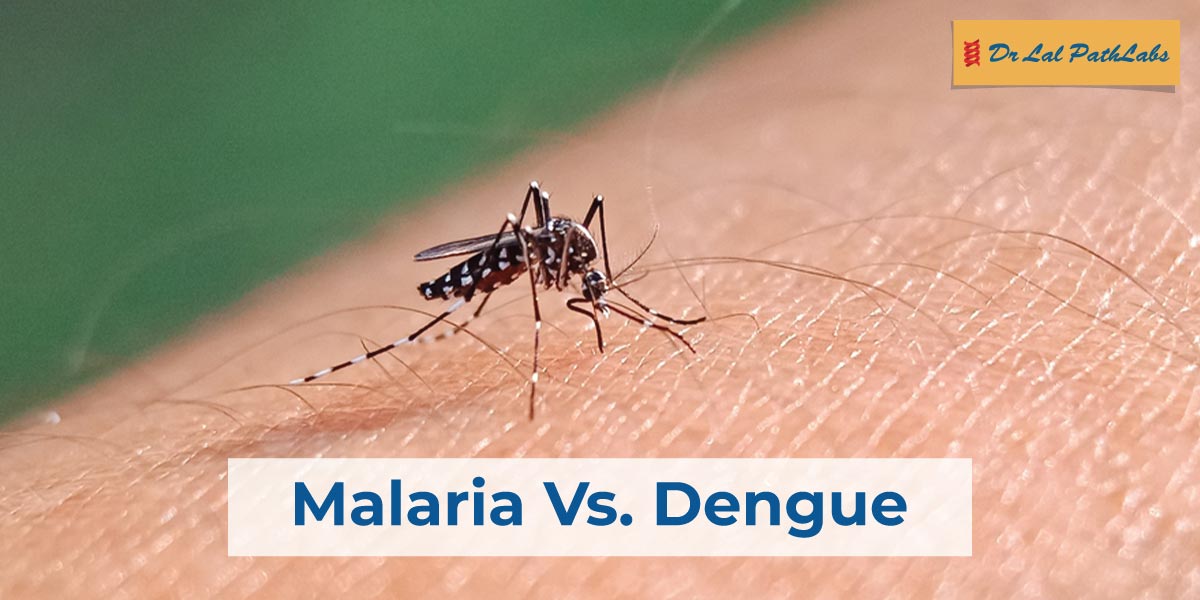
According to the World Health Organisation, over 80% of the global population is at risk of vector-borne diseases — illnesses transmitted by carriers like mosquitoes, ticks, and flies. Among these, mosquito-borne infections pose the greatest threat, with malaria and dengue being two of the most widespread and dangerous. Though they often overlap geographically, the difference between malaria and dengue lies significantly in how they are transmitted, their symptoms, and the tests for dengue.
What Is Dengue Fever?
It is a viral illness caused by four dengue viruses (DENV 1–4), primarily spread by Aedes aegypti mosquitoes. These mosquitoes, which bite during early mornings and late afternoons, breed in clean, stagnant water commonly found around homes.
Dengue mosquito symptoms usually appear 4–10 days after a bite, including pain behind the eyes, high fever, rash, severe headache, and muscle and joint pain. It can also lead to shock syndrome or dengue haemorrhagic fever in extreme cases, both of which can be life-threatening. Since there are four virus types, a person can be infected up to four times, with the second infection posing a higher risk of severe illness due to Antibody-Dependent Enhancement (ADE).
Which Other Diseases Are Spread by Mosquitoes?
Besides malaria and dengue, mosquitoes are responsible for spreading other serious illnesses worldwide. These include:
- Malaria: Caused by Plasmodium parasites and spread by Anopheles mosquitoes, leading to the difference between malaria and dengue mosquito. It can cause high fever, chills, and, in severe cases, death.
- Chikungunya: Spread by Aedes mosquitoes, it leads to intense joint pain and fever that can last for weeks or months. Tests for dengue can help in early detection and differential treatment.
- Zika Virus: Also transmitted by Aedes mosquitoes, it is usually mild in symptoms but can cause congenital disabilities if contracted during pregnancy.
- Japanese Encephalitis: Transmitted by Culex mosquitoes, mainly in Asia, it may cause brain inflammation, seizures, and neurological issues.
- Yellow Fever: Found in parts of Africa and South America; spread by Aedes mosquitoes and can cause jaundice, bleeding, and organ failure.
- West Nile Virus: Spread by Culex mosquitoes; most people show mild or no symptoms, but severe cases can lead to neurological complications.
How is Dengue Fever Linked to Other Mosquito-Borne Diseases?
The link between malaria and dengue leads to significant health challenges that demand detailed surveillance approaches:
- Vector Overlap Zones:
Malaria and dengue are common in tropical areas where Aedes and Anopheles mosquitoes live, leading to ongoing transmission in the same regions. - Diagnostic Confusion:
Most diseases have similar dengue mosquito symptoms like fever, headache, and body pain, making tests for dengue essential for correct diagnosis. - Seasonal Synchronisation:
During the monsoon season, outbreaks of several mosquito-borne diseases, especially malaria and dengue, often happen simultaneously, putting extra pressure on healthcare services. - Co-infection Potential:
A person can get infected with both malaria and dengue at the same time, making treatment more difficult and increasing the risk of severe illness.
What are the Prevention Strategies Against Vector-Borne Diseases?
Preventing vector-borne diseases like dengue and malaria mainly depends on understanding which mosquito causes malaria and dengue and reducing contact with them. Key prevention strategies include:
- Regularly empty or cover containers that collect water, such as flower pots, buckets, tires, and birdbaths, to prevent mosquitoes from laying eggs.
- Apply insect repellents containing picaridin, DEET, or lemon/eucalyptus oil on clothing and exposed skin.
- Use bed nets, window and door screens, and protective clothing to reduce mosquito bites, especially during peak biting times.
- Public education campaigns, especially on understanding the difference between malaria and dengue, encourage communities to maintain clean environments and participate in mosquito control programs.
- Improve drainage systems and reduce stagnant water in public spaces to lower malaria and dengue instances by eradicating mosquito breeding grounds.
- Vaccines (e.g., Yellow Fever, limited dengue vaccines) and tests for dengue can provide additional protection.
- If dengue mosquito symptoms or any mosquito-borne illness appear, seek medical attention immediately for proper diagnosis and testing.
- Stay well-hydrated, get ample rest, monitor temperature regularly, and watch for warning signs of severe illness to ensure timely care and prevent complications.
Early diagnosis through appropriate tests for dengue helps prevent serious complications. For accurate diagnosis of mosquito-borne diseases, individuals can download the Dr. Lal PathLabs app for reliable testing services. People should not ignore fever and other dengue fever symptoms, especially during monsoon season when malaria and dengue cases increase.
Booking tests for dengue and other mosquito-borne diseases with Dr. Lal PathLabs ensures better health outcomes and prevents complications.
FAQs
1. How is the dengue mosquito different from other mosquitoes?
The difference between malaria and dengue mosquitoes is evident in their appearance and behaviour. Dengue mosquitoes (Aedes) have white stripes on their legs and body and bite during the daytime. Malaria mosquitoes (Anopheles) are plain-coloured and bite mainly at night. Understanding which mosquito causes malaria and dengue helps people get proper protection at the correct times. Tests for dengue are helpful to rule out dengue.
2. Does sleeping help in dengue fever?
Yes, proper rest and sleep are essential during dengue fever. Sleep helps the body fight the infection and repair damage caused by the virus. Additionally, tests for dengue at the right time is essential to provide the correct treatment.